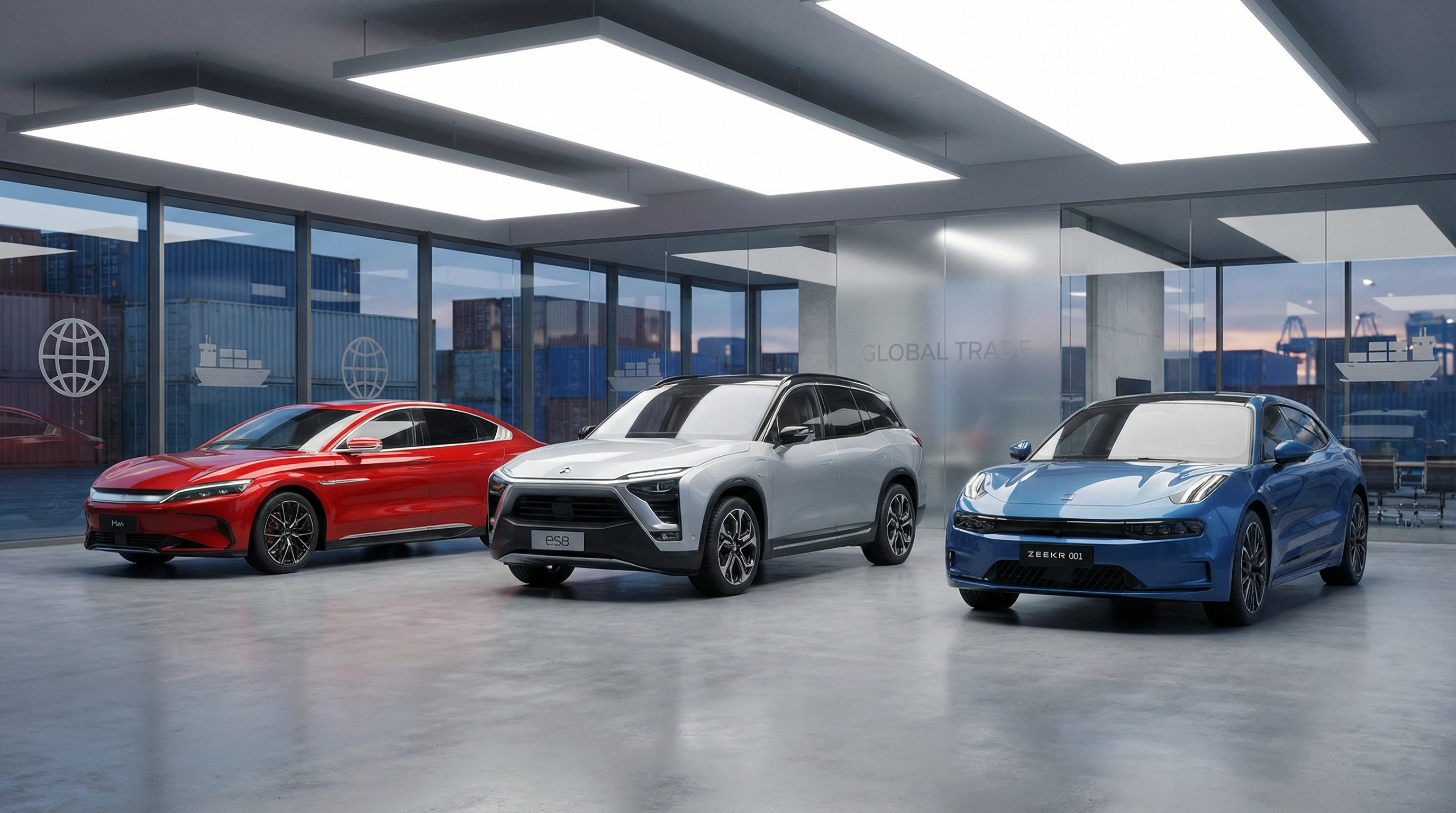
China has transformed from the world's largest automotive market into a dominant force in electric vehicle manufacturing and exports. The convergence of technological innovation, government support, and aggressive pricing strategies has positioned Chinese automotive brands—particularly BYD, NIO, Geely, and Zeekr—as formidable competitors to established Western and Japanese manufacturers.
The Rise of Chinese EV Brands
BYD has emerged as the world's largest EV manufacturer, surpassing Tesla in quarterly sales. The company's vertical integration—producing its own batteries, semiconductors, and powertrains—provides cost advantages and supply chain resilience that competitors struggle to match. BYD's Blade Battery technology offers enhanced safety and longevity while reducing costs, making EVs accessible to mass-market consumers.
NIO has positioned itself as China's premium EV brand, competing directly with Tesla, Mercedes-Benz, and BMW. The company's battery swap technology addresses range anxiety by enabling full battery replacement in under five minutes. NIO's expansion into European markets demonstrates Chinese brands' ambitions beyond domestic dominance.
Zeekr, Geely's premium electric brand, combines Swedish design heritage (through Volvo ownership) with Chinese manufacturing efficiency. The Zeekr 001 and 009 models offer luxury features at prices significantly below European competitors, disrupting premium segment pricing structures.
Export Boom: Chinese EVs Go Global
Chinese automotive exports exceeded 4.9 million units in 2023, with EVs comprising an increasing share. Southeast Asia, Middle East, Latin America, and Eastern Europe have become primary markets for Chinese vehicles. Price competitiveness—often 30-40% below comparable Western models—makes Chinese EVs attractive in price-sensitive markets.
The European market presents both opportunity and challenge. While Chinese EVs have gained market share in Norway, Netherlands, and Belgium, potential tariffs and regulatory scrutiny threaten expansion. Chinese manufacturers are responding by establishing local production facilities—BYD's Hungary factory and Geely's existing European operations provide tariff-free access to EU markets.
The Second-Hand Car Market Revolution
China's used car market is experiencing explosive growth, reaching 18.4 million transactions in 2023. Government reforms eliminating inter-provincial transfer restrictions and standardizing vehicle condition reporting have professionalized the market. Digital platforms like Guazi and Uxin have transformed used car trading from informal dealerships to transparent online marketplaces.
The proliferation of EVs in China's vehicle fleet creates unique opportunities in the used EV segment. As early EV adopters upgrade to newer models with improved range and features, a growing inventory of affordable used EVs enters the market. These vehicles, often with 60-80% remaining battery capacity, provide entry-level EV access at prices below new economy cars.
Export opportunities for used Chinese vehicles are emerging. Markets with less stringent emissions regulations and lower purchasing power—including parts of Africa, Southeast Asia, and Central Asia—represent potential destinations for China's used vehicle inventory. The Belt and Road Initiative's infrastructure investments facilitate logistics for vehicle exports to these regions.
Supply Chain Advantages
China's automotive supply chain integration provides structural advantages. The country produces 80% of global battery cells, 70% of cathode materials, and 85% of anode materials. This vertical integration in critical EV components enables Chinese manufacturers to control costs and secure supply during shortages that constrain competitors.
The semiconductor shortage that disrupted global automotive production had less impact on Chinese manufacturers due to domestic chip production prioritization. While Western automakers idled factories, Chinese EV makers maintained production, gaining market share during competitors' supply constraints.
Procurement Opportunities
For businesses seeking to enter EV markets or expand automotive offerings, Chinese manufacturers offer compelling value propositions. The combination of competitive pricing, improving quality, and comprehensive after-sales support makes Chinese vehicles attractive for fleet operators, rental companies, and emerging market distributors.
Silk Route Materials specializes in facilitating access to Chinese automotive manufacturers. Our established relationships with BYD, Geely, and other major producers enable efficient procurement of new vehicles for export. We handle quality verification, logistics coordination, and customs clearance, streamlining the import process for international buyers.
The used vehicle segment presents additional opportunities. As China's used EV market matures, sourcing quality pre-owned vehicles for export to markets with lower EV penetration offers attractive margins. Our China-based team can inspect vehicles, verify battery condition, and arrange shipping to destination markets.
Conclusion
China's automotive industry has evolved from producing low-cost economy cars to manufacturing technologically advanced EVs that compete globally. The combination of domestic market scale, supply chain integration, and government support positions Chinese brands for continued growth. For businesses seeking automotive procurement solutions, engaging with Chinese manufacturers and understanding market dynamics is essential. Silk Route Materials provides the expertise and relationships necessary to navigate Chinese automotive markets effectively.